Moisture problems can hide behind walls, under floors, and inside wood long before visible damage appears. A good meter helps you catch leaks, dampness, and drying issues early.
Below, we’ve narrowed down the best options for home use based on accuracy, ease of use, surface compatibility, and everyday practicality.
Best 10 Moisture Meters for Home Use Picks for 2026
Pin & Wall Detector
General Tools MMD4E Moisture Meter
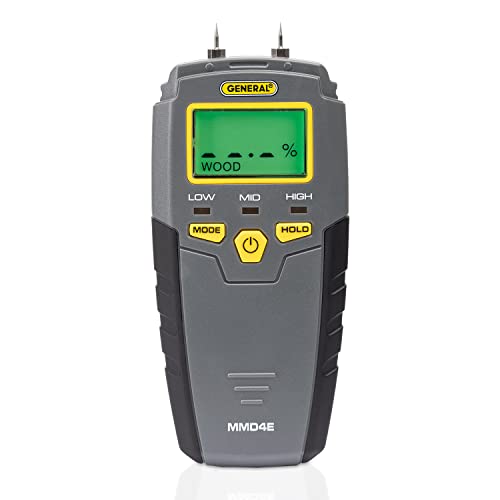
- Pins for wood, drywall, and building materials
- Backlit LCD with hold and moisture tones
- Includes battery and extra pins
Best For: Homeowners checking damp spots and possible leaks
Non-Invasive Scanning

- Pinless scanning avoids surface marks
- 4 modes for wood, wall, and masonry
- Color LCD with hold and alerts
Best For: Non-invasive home moisture checks on finished surfaces
Deep Surface Scanner
General Tools MMD7NP Pinless Meter

- Pinless and non-invasive surface checks
- Reads up to 3/4 inch deep
- Backlit LCD with LED bar and alert
Best For: Users wanting deeper non-invasive scans on home surfaces
Pin Probe Value Pick

- Two-pin direct moisture measurements
- 6 scales for wood and building materials
- Backlit LCD with color indicators
Best For: Direct checks on wood, flooring, and plaster walls
Non-Destructive Wall Scanner
Klein Tools ET140 Pinless Moisture Meter

- Pinless EMF detection up to 3/4-inch deep
- Made for drywall, masonry, hardwood, and softwood
- Includes reverse-contrast display and LED bars
Best For: Checking walls and building materials without surface damage
Area-Scan Leak Finder
LASELION MS04 Pinless Moisture Meter

- Ball probe for larger-area and corner scans
- Measures moisture from 5–40 mm deep
- Customizable MID and WET humidity alarms
Best For: Non-destructive scans in corners, walls, floors, and ceilings
Precision Pick
Mecurate Digital Pin Type Wood Moisture Meter

- Pin meter for wood and building materials
- 8 wood calibration scales with 2 modes
- Backlit display with colored moisture indicators
Best For: Homeowners and DIY users who want a practical pin moisture meter
Non-Invasive Choice
General Tools MM8 Pinless Moisture Meter

- Pinless design helps avoid surface damage
- Settings for drywall, masonry, softwood, and hardwood
- Backlit LCD with LED bar graph and audible alert
Best For: People who want a non-destructive moisture check for walls and wood
Rechargeable Upgrade
AWT-380 Pinless Moisture Meter

- Pinless scanning for wood, drywall, masonry, and furniture
- USB-C rechargeable with color display and data storage
- Adjustable visual and audible alarms for moisture thresholds
Best For: Home users who want a rechargeable pinless meter with added data features
Pin & Wall Detector – General Tools MMD4E Moisture Meter
If you want a straightforward option among moisture meters for home use, the General Tools MMD4E is built for checking wood, drywall, and other building materials with pin-style contact readings. It includes low, medium, and high moisture tones, on-screen icons, a hold button, and a backlit LCD that makes quick checks easier in dim spaces.
Best For: Homeowners who want a simple pin meter for spotting damp wood, drywall, and possible leak areas.
Pros:
- Measures wood and building materials, including drywall and concrete.
- Includes extra stainless steel pins and a cap that doubles as a calibration checker.
- Backlit LCD with large digits, hold function, and audible moisture alerts.
- Comes with a 9V battery included.
Cons:
- Requires pin insertion, so it is not a non-invasive option.
- Best suited to spot checks rather than broad surface scanning.
This is a practical pick if you mainly need a basic, readable meter for troubleshooting damp spots and checking whether an area is still wet or has dried.
Non-Invasive Scanning – Povlen Pinless Moisture Meter
This pinless model is a strong fit if you want moisture meters for home use without leaving holes or scratches behind. It uses advanced sensor technology, a smart chip, and four modes for softwood, hardwood, wall, and masonry, making it useful for scanning a variety of surfaces and materials.
Best For: Users who want a non-invasive moisture meter for wood, drywall, masonry, and general home checks.
Pros:
- Pinless design helps protect finished surfaces from marks.
- Four measurement modes cover softwood, hardwood, wall, and masonry.
- Large LCD color display with analog bar and audible/red alerts.
- Includes hold function, auto power off, and low battery indicator.
Cons:
- Not designed for pin-probe contact readings.
- Best used as a scanning tool rather than a deep material probe.
If you want quick moisture checks on visible surfaces and prefer not to damage them, this is the most surface-friendly option in the group.
Deep Surface Scanner – General Tools MMD7NP Pinless Meter
General Tools Digital Moisture Meter MMD7NP - Humidity Sensor- Pinless and Non-Invasive
Check Price On AmazonFor moisture meters for home use that need a little more reach, the General Tools MMD7NP offers pinless, non-invasive detection with readings up to 3/4 inch deep into the surface. It is designed for checking wood, wallboard, drywall, and masonry while avoiding the scratches or holes that pin meters can leave behind.
Best For: Homeowners and DIYers who want a pinless meter with deeper surface reading and clear alert features.
Pros:
- Pinless design will not mar, scratch, or damage surfaces.
- Reads up to 3/4 inch deep with ranges for softwood, hardwood, and wall materials.
- Backlit LCD, 3-color LED bar graph, hold button, and audible alert.
- Includes auto-calibrating behavior plus out-of-range and low-battery alerts.
Cons:
- Uses relative readings for wallboard, drywall, and masonry rather than a pin-style contact probe.
- Battery is not included in the notes as part of the main accessory list.
This model stands out if you want a cleaner, non-invasive way to look for dampness across common home surfaces and prefer a deeper scan than many basic pinless meters.
Pin Probe Value Pick – COCZOW Wood Moisture Meter
This pin moisture meter is aimed at quick, practical checks across wood and building materials in a home setting. It uses two high-precision pins, an LCD backlight, and color-coded green, yellow, and red feedback to help identify whether moisture is low, medium, or high before problems like warping or leaks get worse.
Best For: Buyers who want a straightforward pin-type meter for wood, flooring, plaster walls, and similar materials.
Pros:
- Two high-precision pins for direct moisture readings.
- Six calibrated scales and range coverage for wood and building materials.
- LCD backlight with color indicators plus hold and max/min functions.
- Includes automatic shutdown for convenience.
Cons:
- Pin contact means it can leave small marks on the test surface.
- Less suited to those looking specifically for non-invasive scanning.
As a budget-friendly style of moisture meter for home use, it focuses on direct measurement and simple interpretation rather than advanced scanning features.
Non-Destructive Wall Scanner – Klein Tools ET140 Pinless Moisture Meter
If you want moisture meters for home use that can help spot leak-related dampness without damaging surfaces, the Klein Tools ET140 is built for drywall, wood, and masonry. It uses pinless EMF technology to detect relative moisture content up to 3/4-inch below the surface, which makes it a practical option for checking walls and framing after flooding or suspected leaks.
Best For: Homeowners and DIYers who want a non-destructive way to check drywall, masonry, hardwood, and softwood for moisture.
Pros:
- Pinless detection helps avoid puncturing finished surfaces.
- Measures up to 3/4-inch below the surface.
- Works on drywall, masonry, hardwood, and softwood, calibrated for those materials.
- Includes a reverse-contrast display, nine LED bars, hold, low battery, and auto-power off.
Cons:
- Calibrated only for the listed building materials.
- Measures relative moisture content rather than an exact universal reading.
Overall, this is a straightforward pick if you care more about quick, non-destructive moisture screening than advanced specialty features. The included drop protection, battery, and compact form make it easy to keep on hand for routine home checks.
Multi-Mode Pin Tester – PREXISO Wood Moisture Meter
Among moisture meters for home use, the PREXISO Wood Moisture Meter stands out if you want a pin-type tool with multiple read modes and environmental tracking. Its two stainless steel pins provide direct measurement, and the unit adds temperature and humidity readings plus several measurement modes for comparing moisture levels in walls, wood, and other listed materials.
Best For: Users who want a pin-style moisture meter with extra measurement modes for wood, walls, and home inspection tasks.
Pros:
- Two high-precision pins provide direct moisture testing.
- Offers single point, multi-point average, maximum, and minimum modes.
- Also measures temperature and humidity of the environment.
- Includes 7 calibration scales for softwood, hardwood, building materials, and more.
Cons:
- Requires pin insertion into the surface being tested.
- Best suited to the materials and moisture range listed by the manufacturer.
This is a practical option if you want more than a basic moisture reading and like the idea of mode selection and environmental data in one tool. It is especially useful for checking wood before use and for identifying dampness in home materials.
Area-Scan Leak Finder – LASELION MS04 Pinless Moisture Meter
If you’re comparing moisture meters for home use and want a non-destructive model that can reach awkward spots, the LASELION MS04 is designed for area scans with a ball probe. It checks moisture in wood, walls, and construction materials across a 5–40 mm depth range, and its customizable humidity alarms can warn you when readings cross your chosen limits.
Best For: Homeowners and repair users who want non-destructive moisture scanning for walls, floors, ceilings, and corners.
Pros:
- Ball probe supports area and corner scans.
- Non-destructive design helps protect finished surfaces.
- Detects moisture from 5–40 mm deep.
- Customizable MID and WET humidity alarms add helpful alerts.
Cons:
- Less specialized for direct pin-style spot testing.
- Focuses on area scanning rather than detailed material-specific calibration.
This model makes sense if your priority is finding hidden moisture without causing damage, especially in places that are difficult to reach. The included flashlight, case, and batteries make it easy to start using right away.
Precision Pick – Mecurate Digital Pin Type Wood Moisture Meter
If you need moisture meters for home use that can check both wood and building materials, this Mecurate model offers a practical pin-type setup with clear readings and simple operation. It’s useful for spotting damp spots, hidden leaks, and moisture problems before they turn into bigger repairs.
Best For: Homeowners, painters, woodworkers, and DIY users who want a pin meter for wood plus building materials.
Pros:
- 2 modes with 8 wood calibration scales for different material types
- 3 colored indicators and on-screen icons make moisture levels easy to interpret
- Backlit display, hold function, and built-in temperature readout add convenience
- Includes a carry pouch and replacement pins for easier storage and upkeep
Cons:
- Pin-type design requires contact with the surface
- Wood mode depends on selecting the correct calibration scale
Overall, this is a solid choice if you want a straightforward meter for checking moisture in both wood and common building materials around the home. Its clear display and calibration options make it especially handy for routine inspections.
Non-Invasive Choice – General Tools MM8 Pinless Moisture Meter
For moisture meters for home use where you want to avoid leaving pin marks, this pinless General Tools model is built for fast checks on wood, drywall, masonry, and mold-prone areas. It’s designed to help identify wet spots and suspicious leak stains before damage spreads.
Best For: Users who want a non-invasive meter for walls, drywall, lumber, and leak inspection.
Pros:
- Pinless sensing protects surfaces from damage
- Separate settings for drywall, masonry, softwood, and hardwood
- Backlit LCD, 3-color LED bar graph, and audible alert improve readability
- Can read up to 3/4 inch deep and includes low battery and out-of-range alerts
Cons:
- Uses a 9V battery rather than rechargeable power
- Relative readings for wallboard and masonry are less specific than wood measurements
This is a strong fit if you want a quick, non-destructive way to check for moisture in finished surfaces and wall areas. Its surface-friendly design makes it especially practical for leak hunting and mold prevention.
Rechargeable Upgrade – AWT-380 Pinless Moisture Meter
If you want moisture meters for home use with a modern, easy-to-carry design, the AWT-380 adds pinless scanning, rechargeable power, and on-screen data features. It’s a good option for checking walls, floors, furniture, drywall, and other building materials without making holes.
Best For: Home users who want a rechargeable pinless meter with alerts and data tracking.
Pros:
- Pinless operation measures without leaving pin holes
- Fast readings with up to 0.79 in depth and two scans per second
- USB-C rechargeable battery is convenient for regular home use
- Color display, max hold, data storage, and adjustable alarms add useful features
Cons:
- Higher feature count may be more than casual users need
- Flat-pad design is geared toward surface scanning rather than pinpoint probing
Overall, this model stands out for buyers who want a non-destructive meter with rechargeable convenience and extra tracking tools. It makes sense for routine inspections, leak checks, and monitoring drying progress around the home.
How We Picked the Best Moisture Meters for Home Use
We focused on Moisture Meters for Home Use that offer a sensible mix of accuracy, usability, and versatility. Priority went to models that are easy to read, simple to calibrate or operate, and suitable for common household materials like wood, drywall, and masonry.
We also favored meters with helpful everyday features such as pinless scanning, backlit displays, color indicators, adjustable alarms, and clear moisture ranges. For homeowners, convenience matters as much as measurement style.
Quick Comparison
Pin-type meters are best when you want a direct reading in wood or building materials and don’t mind small probe marks. Pinless meters are better for fast, non-destructive scanning across larger surfaces. Multi-mode models can be useful if you need one tool for lumber, drywall, and leak screening.
If you’re mainly checking framing, flooring, or firewood, a simple wood meter may be enough. If you want to inspect walls for hidden dampness, choose a pinless or dual-mode model.
Key Buying Factors for Moisture Meters for Home Use
Material Compatibility
Make sure the meter supports the surfaces you plan to test. Not every tool handles wood, drywall, masonry, paper, or construction materials equally well.
Pin Vs. Pinless
Pin meters measure resistance between probes and are often straightforward and affordable. Pinless meters scan below the surface without leaving holes, which is useful for finished walls, cabinets, and trim.
Depth and Detection Range
For hidden moisture, a deeper scan range can be valuable. For simple wood checking, a standard reading depth may be enough.
Display and Alerts
Backlit screens, large numbers, and color indicators make readings easier to interpret. Audible alarms can help you spot problem areas faster.
Calibration and Modes
Multiple modes or calibration settings improve flexibility when switching between materials. This is especially useful if you want one meter for several jobs around the house.
Who Should Buy Which Moisture Meters for Home Use?
Choose a pinless model if you want fast, non-destructive checks on walls and finished surfaces. Choose a pin-type meter if your priority is accurate wood readings and you don’t mind probe contact.
Homeowners looking for one all-around tool should consider a multi-surface model with clear alerts and an easy-to-read display. If you mainly want leak detection or mold-prone area screening, a meter designed for drywall, masonry, and hidden moisture is the better fit.
For most buyers, the best Moisture Meters for Home Use are the ones that match the surface, read clearly, and fit the way you’ll actually inspect your home.