Smartphone thermal cameras make it easier to spot heat loss, electrical issues, leaks, and other hidden problems without carrying a full-size imager.
In this roundup, we focus on compatibility, image quality, and everyday usefulness so you can choose the right option for your phone and your work.
Best 10 Smartphone Thermal Cameras Picks for 2026
Universal USB-C Thermal Scanner

- USB-C compatibility for iOS, Android, and Windows devices
- TISR boosts 256×192 capture to 512×384 detail
- Compact 1.1 oz body with photo and video recording
Best For: General inspections, HVAC, electrical, and automotive checks
Android USB-C Thermal Imager

- USB-C support for Samsung Galaxy, Pixel, and other Android phones
- MSX blends thermal and visual detail for easier inspection
- Includes guided workflows for air leaks and moisture checks
Best For: Android users who want guided home and jobsite inspections
Macro-Focus Phone Thermal Camera

- Manual-focus lens for 8mm macro and mid-range inspections
- RazorSharp X³ boosts 256×192 data to 512×384 output
- Low 0.32W power draw with phone-powered operation
Best For: Detailed inspections in tight spaces and electronics work
Pocket Thermal Imager

- Standalone pocket camera with 240×240 TISR-enhanced imaging
- 15-hour runtime and built-in photo storage
- IP54 protection and 2m drop resistance
Best For: Portable leak, HVAC, and electrical inspections without a phone
Dual-Lens USB-C Pick
TOPDON TC001 Max Dual-Lens Thermal Camera

- Dual-lens IR + visible-light imaging
- 512×384 enhanced thermal resolution
- USB-C and Lightning plug-and-play
Best For: Mobile diagnostics on iPhone, Android, and Windows
Wireless Jobsite Option
FLIR Edge Wireless Thermal Camera

- Bluetooth wireless use with iOS and Android
- 240×180 super resolution from 80×60 native
- Drop-tested, jobsite-tough design
Best For: Hard-to-reach inspections and fieldwork
Android Resolution Value
TOPDON TC001 Thermal Imaging Camera

- 512×384 enhanced thermal resolution
- Low 0.35W power draw for longer use
- Android app adds graphs and multi-point readings
Best For: Android owners needing portable high-detail thermography
Phone-Ready Heat Scanner
REVASRI 320x240 USB-C Thermal Imager
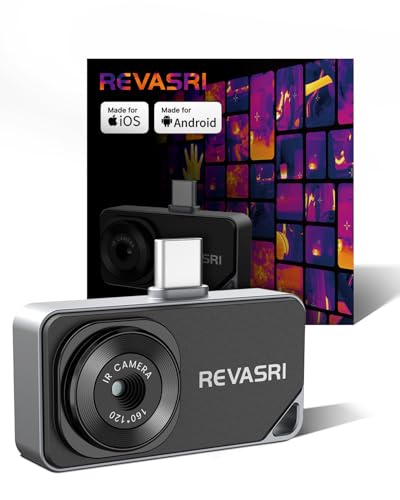
- 320x240 super-resolution with 25Hz refresh
- USB-C compatibility for iOS, Android, and Windows
- IP54 protection plus 1-meter drop resistance
Best For: Portable inspections on phones, tablets, and USB-C computers
Pocket Precision Imager
AMPBANK M256 Compact Thermal Camera

- 256x192 IR with 512x384 TISR enhancement
- 30g pocket-size body with low 0.35W power use
- Point, line, and plane modes plus 10 palettes
Best For: Portable diagnostics and longer inspection sessions
Field Leak Finder
GOYOJO 192x192 USB-C Thermal Imager

- USB-C plug-and-play with no batteries needed
- 192x192 IR sensor with 50° field of view
- Wide -4°F to 752°F range for inspection tasks
Best For: Leak detection, HVAC checks, and everyday troubleshooting
Universal USB-C Thermal Scanner – TOPDON TC002C Duo
If you want smartphone thermal cameras that work across a wide range of modern devices, the TOPDON TC002C Duo is built around broad USB-C compatibility and practical field use. It plugs into USB-C iPhone, iPad, Android, and Windows devices, then uses TISR enhancement to turn 256×192 capture into a sharper 512×384 view for easier heat spotting.
Best For: Technicians, inspectors, and homeowners who need a compact USB-C thermal camera for general diagnostics and real-time heat tracking.
Pros:
- Works with USB-C smartphones and tablets across iOS, Android, and Windows
- TISR enhancement boosts thermal detail to 512×384 from 256×192
- 25Hz refresh rate and 40mK sensitivity support smoother heat tracking
- Measures from -4°F to 1022°F and supports photo/video recording
Cons:
- Not compatible with Mac devices or Android 16 devices at the moment
- Accuracy is listed as ±2°C or 2%, so it is more of a diagnostic tool than a lab instrument
For buyers comparing smartphone thermal cameras, this TOPDON model stands out for broad USB-C support, a very compact body, and a strong balance of resolution and temperature range. It is a solid pick if you want a portable inspection camera for HVAC, electrical, automotive, or general home use.
Android USB-C Thermal Imager – FLIR One USB-C Android
Among smartphone thermal cameras, the FLIR One is aimed at Android users who want a straightforward plug-in inspection tool with guided workflows. It connects through USB-C, uses FLIR MSX to blend thermal and visible detail, and upscales the image to 240×180 for a clearer look at common problem areas.
Best For: Android owners who want guided home inspections, leak checks, and a rugged everyday thermal camera for phone use.
Pros:
- USB-C compatibility with Android phones including Samsung Galaxy and Google Pixel
- Vivid IR upscales to 240×180 and MSX adds visual detail in real time
- Built-in inspection guides help with air leaks, moisture buildup, and similar issues
- Rated to survive 1.5m drops for jobsite use
Cons:
- Android USB-C focused, so it is not the broadest cross-platform option here
- Native IR resolution is 80×60 before super-resolution processing
The FLIR One makes sense if you value app guidance and a durable build over chasing the highest headline specs. It is a practical smartphone thermal camera for quick home diagnostics and field work where step-by-step support matters.
Macro-Focus Phone Thermal Camera – Thermal Master P3
If you need smartphone thermal cameras for tighter, more detailed inspections, the Thermal Master P3 is designed with a manual-focus lens and a long extension cable for tricky access points. It supports modern USB-C phones, older iPhones with a Lightning adapter, and Windows computers, while its low power draw keeps it running directly from your device.
Best For: Users who need macro-level thermal inspection for circuit boards, HVAC components, and other tight or hard-to-reach spaces.
Pros:
- Manual-focus lens supports 8mm macro inspection and mid-range scanning
- RazorSharp X³ processing turns native 256×192 data into 512×384 images
- Very sensitive at ≤35mK with 25Hz frame rate for real-time use
- Works with USB-C iPhone 15+, Android, older iPhones via adapter, and Windows
Cons:
- No built-in battery, so it depends on the connected phone or computer
- Manual focus may take more adjustment than fixed-focus models
This is a strong choice when inspection detail matters more than simplicity. The P3’s macro focus, low power use, and wide app feature set make it especially useful for electronics, HVAC, automotive, and home troubleshooting.
Pocket Thermal Imager – TOPDON TC004 Mini
For buyers comparing smartphone thermal cameras and pocketable standalone tools, the TOPDON TC004 Mini offers a compact way to check heat patterns without relying on a phone attachment. It starts at 128×128 thermal imaging, uses TISR to reach 240×240, and adds a 40°×30° field of view plus 25Hz refresh for smooth everyday inspections.
Best For: Homeowners and technicians who want a small standalone thermal camera for leak detection, electrical checks, and general troubleshooting.
Pros:
- TISR enhances 128×128 imaging to 240×240 for better detail
- Built-in 512MB storage can hold up to 8,000 photos
- 15-hour runtime reduces the need for frequent charging
- Compact, drop-resistant design with IP54 water resistance
Cons:
- Standalone design means it is not a phone-mounted smartphone thermal camera
- Resolution is lower than higher-end phone add-ons after enhancement
The TC004 Mini is a convenient option if you want something portable, self-contained, and easy to carry around the house or jobsite. Its long battery life and automatic photo capture make it useful for repeated checks where simplicity matters.
Dual-Lens USB-C Pick – TOPDON TC001 Max Dual-Lens Thermal Camera
If you want smartphone thermal cameras that are easy to carry and use, the TOPDON TC001 Max stands out for its dual-lens setup, plug-and-play USB-C or Lightning connection, and high-resolution thermal output. It’s built for fast inspections on iPhone, Android, and Windows devices without batteries or pairing hassles.
Best For: Mobile users who want a compact, case-friendly thermal camera for electrical, HVAC, and general troubleshooting work.
Pros:
- Dual-lens design combines infrared and visible-light imaging for clearer outlines and faster issue spotting
- TISR boosts thermal resolution from 256×192 to 512×384 with 25Hz refresh and ≤40mK NETD
- USB-C and Lightning adapters support plug-and-play use on iPhone, Android, and Windows devices
- TopInfrared and TopView apps add photo/video capture, 3D analysis, trend graphs, and color palettes
Cons:
- Requires a compatible phone or tablet with the right connection type
- Best suited to inspection tasks rather than general photography
For buyers comparing smartphone thermal cameras, this model focuses on flexibility, portability, and sharper thermal detail. Its compact body and broad temperature range make it a strong all-around diagnostic tool.
Wireless Jobsite Option – FLIR Edge Wireless Thermal Camera
The FLIR Edge is one of the more convenient smartphone thermal cameras if you want wireless operation and easy use in tight spaces. It connects over Bluetooth, adds Flir MSX image merging, and is built tough enough for jobsite use.
Best For: Inspectors and technicians who want a wireless thermal camera for reaching awkward spots and sharing images easily.
Pros:
- Wireless Bluetooth connection works with all iOS and Android devices
- Vivid IR upscales thermal images to 240×180 from 80×60 native resolution
- MSX merges thermal and visual detail in real time for easier interpretation
- Jobsite-ready build is rated to survive a 2-meter drop and includes cloud sharing support
Cons:
- Battery life is listed at about 2 hours
- Native thermal resolution is lower than higher-resolution competitors
If wireless convenience matters most, the Edge is a practical pick among smartphone thermal cameras. It trades raw resolution for mobility, ruggedness, and an easier way to inspect hard-to-reach areas.
Android Resolution Value – TOPDON TC001 Thermal Imaging Camera
The TOPDON TC001 is a straightforward choice for smartphone thermal cameras on Android when you want higher thermal detail without a bulky setup. It connects to compatible phones or tablets, uses very low power, and adds useful app tools for temperature analysis.
Best For: Android users who want a portable thermal imager with strong resolution and long runtime from their phone.
Pros:
- TISR enhances thermal imaging from 256×192 to 512×384 for clearer detail
- Low 0.35W power draw helps extend phone-based operating time
- Measures from -4°F to 1022°F with 2°C accuracy or 2% of the object’s temperature
- App tools include point, line, and surface readings, plus waveform graphs and 9 color palettes
Cons:
- Not compatible with iPhone 15
- Requires Android devices with OTG support and TISR compatibility
This model is a strong value-focused option for users who prioritize detail and analysis features. Among smartphone thermal cameras, it’s especially appealing for Android owners who need a compact inspection tool with long working time.
Phone-Ready Heat Scanner – REVASRI 320×240 USB-C Thermal Imager
If you want smartphone thermal cameras that feel straightforward and practical, the REVASRI model is built around easy USB-C plug-in use with iPhone, Android, Windows, and tablet compatibility. It combines 320×240 super-resolution output, a 25Hz refresh rate, and 40mk sensitivity for smoother inspection work when checking heat loss, electrical issues, or HVAC problems.
Best For: Homeowners, technicians, and DIY users who want a portable thermal camera for quick inspections on a phone or tablet.
Pros:
- 320×240 super-resolution image output with 25Hz refresh rate
- Works with USB-C phones, tablets, and computers across iOS, Android, and Windows
- Wide -4°F to 842°F temperature range with 9 color modes
- Includes high/low temperature alarms, temperature tracking, and 15x electronic zoom
Cons:
- Requires the dedicated Camera+ app from the manual QR code
- Uses device power instead of an internal battery
Overall, this is a solid pick if you want smartphone thermal cameras that prioritize resolution upgrades, broad compatibility, and simple plug-and-play operation. The IP54 rating and 1-meter drop protection also add confidence for jobsite or garage use.
Pocket Precision Imager – AMPBANK M256 Compact Thermal Camera
For buyers comparing smartphone thermal cameras, the AMPBANK M256 focuses on detailed thermal analysis in a tiny, easy-to-carry form factor. It pairs 256×192 IR resolution with 512×384 TISR enhanced imaging, plus 3D thermal analysis, to help identify temperature anomalies in walls, equipment, and facilities.
Best For: Users who need a compact thermal imager for long sessions, field work, and precise temperature checking.
Pros:
- 256×192 IR resolution with 512×384 TISR enhanced imaging
- Low 0.35W power draw supports 4-7 hours of use on compatible Android devices
- Point, line, and plane measurement modes with 10 color palettes
- Very light 30g pocket-size design with USB extension cable and storage accessories
Cons:
- Described compatibility centers on OTG-enabled Android devices and computers
- Requires compatible phone battery capacity for the stated runtime
This is a strong option if your priority is practical thermal detail in a highly portable package. The combination of low power use, multiple measurement modes, and enhanced imaging makes it a useful tool for maintenance and inspection tasks.
Field Leak Finder – GOYOJO 192×192 USB-C Thermal Imager
If you’re shopping smartphone thermal cameras for leak detection and troubleshooting, the GOYOJO GW192A is designed to turn a USB-C phone into a thermal imager without pairing or batteries. Its 192×192 infrared resolution, 50° field of view, and wide temperature range make it useful for scanning walls, ceilings, electrical panels, and automotive components.
Best For: DIYers and professionals who want a compact thermal camera for plumbing leaks, HVAC checks, and general inspection work.
Pros:
- USB-C plug-and-play setup with no batteries or pairing required
- 192×192 IR resolution with a 12μm pixel pitch sensor
- 50° field of view for scanning larger areas more easily
- -4°F to 752°F range with ±2% accuracy for a wide mix of diagnostics
Cons:
- Compatibility is highlighted for Android and iPhone 15/16/17 series devices
- Lower resolution than higher-tier thermal imagers in this roundup
As a practical smartphone thermal camera, this model stands out for quick setup and broad real-world use cases. It should appeal to buyers who want a portable infrared tool for leak detection, HVAC work, and everyday troubleshooting.
How We Picked the Best Smartphone Thermal Cameras
We prioritized models that balance thermal resolution, app usability, device compatibility, and real-world portability. For Smartphone Thermal Cameras, the best choice is not always the highest pixel count; stable performance, clear overlays, and a reliable connection matter just as much.
We also looked for helpful extras such as wide temperature ranges, manual focus or macro options, wireless flexibility, and support for both iPhone and Android where possible.
Quick Comparison: What Matters Most
If you mainly need general troubleshooting, a compact USB-C model may be the easiest fit. If you want more detail for inspections, look for higher thermal resolution and stronger visual enhancement. Wireless options can be more flexible, while phone-mounted units often offer the simplest setup.
Resolution
Higher thermal resolution helps reveal smaller hot spots and finer temperature differences. For detailed electrical, HVAC, or plumbing work, this is especially important.
Compatibility
Check whether the camera supports your exact phone type, including USB-C iPhone models, Android devices, or broader iOS/Android support. Some products are limited to one connection style.
App and Workflow
A good app should make it easy to capture images, adjust color palettes, and read temperatures quickly. Simple operation is often better than extra features you will never use.
Key Buying Factors for Smartphone Thermal Cameras
Start with your main use case. Homeowners may want a compact tool for checking drafts, appliances, and moisture issues, while contractors may need stronger detail for diagnostics and reporting.
Consider temperature range, minimum focus distance, frame rate, and whether the camera includes visual enhancement such as MSX or TISR-style processing. These can improve practical image clarity even when raw resolution is modest.
Battery life and build quality also matter if you plan to use the camera on job sites or for longer inspection sessions.
Who Should Buy Which Smartphone Thermal Cameras?
If you want the easiest everyday option, choose a lightweight USB-C model that works with your current phone. If you need better detail for inspection work, step up to a higher-resolution unit. If portability and flexibility matter most, a wireless model may be the best fit.
Among Smartphone Thermal Cameras, the right pick depends less on brand names and more on how often you will use it, how much detail you need, and which device ecosystem you already own.