When it comes to maintaining landscape stability, selecting the right slope stabilization grid is vital. You need a solution that not only manages erosion but also supports healthy vegetation growth. With various options available, each offering unique features, it’s important to understand what sets them apart. Let’s explore the ten best grids on the market and discover how they can effectively enhance your outdoor spaces.
Sunnyglade Ground Grid for Driveway Stabilization (4 x 40 FT)

If you’re looking to enhance your driveway’s stability and load-bearing capacity, the Sunnyglade Ground Grid (4 x 40 FT) is your ideal solution. This 2-inch thick grid covers approximately 160 square feet and features 10-inch cells, making it perfect for various applications, including patios and RV parking. Constructed from high-density polyethylene, it’s recyclable and resistant to deformation and aging. With a remarkable load-bearing capacity of 1,880 pounds per square foot when filled, it provides excellent support. Installation is straightforward—just spread the material, anchor it, connect pieces, and fill the cells for lasting stability on slopes or flat areas.
Best For: Homeowners looking for an effective solution to stabilize their driveways, patios, and other outdoor surfaces while enhancing load capacity.
Pros:
- Constructed from durable, recyclable high-density polyethylene (HDPE) that resists deformation and aging.
- Exceptional load-bearing capacity of 1,880 pounds per square foot when filled, ideal for heavy vehicles.
- Easy installation process that allows for quick setup on both slopes and flat areas.
Cons:
- Requires filling with gravel or soil, which may involve additional cost and labor.
- Coverage area may not be sufficient for larger projects without purchasing multiple units.
- May need periodic maintenance to ensure optimal performance over time.
Gravel Ground Grid for Driveway Stabilization

For homeowners seeking a reliable solution to stabilize driveways and prevent erosion, the Gravel Ground Grid stands out with its impressive bearing capacity of 1885 lbs per square foot. Measuring 16.4 x 9.8 ft and only 2 inches high, this HDPE grid is both durable and customizable. You can easily cut and connect it to fit your specific needs. Installation is straightforward—expand the grid, fix it to the ground, and fill the cells with soil, sand, or gravel. It’s perfect for slopes, walkways, and RV parking, ensuring your driveway remains stable and erosion-free.
Best For: Homeowners looking for an effective solution to stabilize driveways and prevent erosion on various terrains.
Pros:
- Durable HDPE material ensures long-lasting performance and resistance to wear.
- High bearing capacity of 1885 lbs per sq ft supports heavy loads and enhances stability.
- Customizable design allows for easy cutting and connecting to fit specific project requirements.
Cons:
- Installation may require additional materials like soil, sand, or gravel, potentially increasing costs.
- Effectiveness can vary based on the type of soil or gravel used for filling the cells.
- Limited height of 2 inches may not be suitable for all types of driveways or heavy-duty applications.
Gravel Grid 4.4×33 FT with 20Pcs Landscape Staples

The Gravel Grid 4.4×33 FT with 20Pcs Landscape Staples is the perfect solution for homeowners and landscapers seeking effective erosion control on both flat and sloped surfaces. This durable grid, made from high-density PE material, can handle up to 1900 pounds per square foot, making it ideal for driveways or parking lots. Installation’s a breeze—just expand the grid, secure it with the included landscape staples, fill it with gravel, and you’re good to go. Plus, it’s resistant to aging and erosion, ensuring long-lasting stability for your garden paths, flower beds, and more. Enjoy a reliable solution for landscape stability!
Best For: Homeowners and landscapers looking for an effective solution for erosion control on driveways, parking lots, and garden paths.
Pros:
- Durable construction from high-density PE material, resistant to aging and erosion.
- Supports up to 1900 pounds per square foot, making it suitable for heavy loads.
- Easy installation process with included landscape staples and customizable options.
Cons:
- May require additional materials for filling, increasing overall costs.
- Limited to flat or sloped surfaces; not suitable for very uneven terrain.
- Initial setup time may be longer for larger areas, depending on individual project size.
40ft x 4ft HDPE Heavy Duty Ground Grid for Driveways and Parking
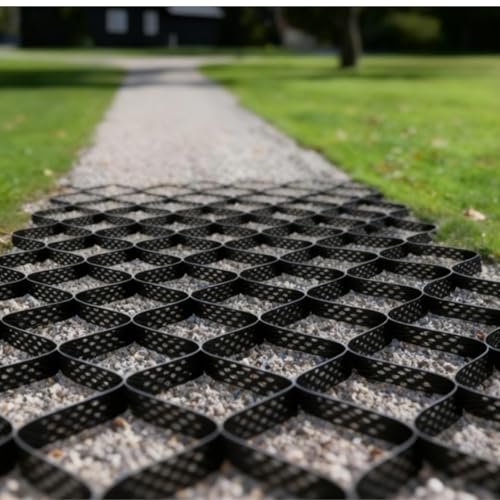
Designed specifically for homeowners and businesses seeking effective erosion control, the 40ft x 4ft HDPE Heavy Duty Ground Grid offers a robust solution for driveways and parking areas. Made from recycled HDPE plastic, this grid is crack-resistant and durable, ensuring long-lasting protection. Its unique honeycomb design promotes excellent water drainage while encouraging healthy grass growth. You’ll prevent waterlogging and soil erosion, maintaining a stable and green lawn even during heavy rain. With an interlocking design, installation is quick and tool-free, allowing you to customize it with soil, gravel, or grass, all without needing expensive concrete or professional help.
Best For: Homeowners and businesses looking for an effective solution to prevent erosion and maintain stable driveways and parking areas.
Pros:
- Made from recycled HDPE plastic, ensuring durability and environmental friendliness.
- Quick and easy installation with an interlocking design, eliminating the need for tools or professional help.
- Promotes healthy grass growth while preventing waterlogging and soil erosion.
Cons:
- Limited to flat surfaces, as uneven ground may require additional preparation.
- Requires filling with soil, gravel, or grass, which may involve extra labor or cost.
- Potentially less effective in extremely heavy loads compared to concrete alternatives.
2″ Thick Gravel Ground Grid for Driveway Stabilization

If you’re looking to enhance your driveway’s stability while preventing erosion, the 2″ Thick Gravel Ground Grid is an excellent choice. Measuring 6.5ft x 16.5ft, this eco-friendly HDPE grid provides a durable solution for various applications, including driveways and patios. With a load-bearing capacity of 1885 lbs per sq ft when filled, it can handle heavy vehicles with ease. Installation is straightforward: just spread the grid, anchor it with rebar stakes, and fill the cells with gravel or soil. Its flexible design allows customization, ensuring you get the perfect fit for your landscape needs.
Best For: Homeowners and landscapers looking for an eco-friendly and durable solution to stabilize driveways and prevent erosion.
Pros:
- High load-bearing capacity of 1885 lbs per sq ft, suitable for heavy vehicles.
- Made from eco-friendly HDPE material, ensuring durability and environmental safety.
- Flexible design allows for easy customization and straightforward installation.
Cons:
- Requires filling with soil, gravel, or sand, which may add to installation time.
- May need additional anchoring in areas with extreme weather conditions.
- Limited to a thickness of 2 inches, which may not be suitable for all landscaping needs.
VIVOSUN 3’’ Depth Ground Grid (9×17 ft)

For anyone looking to enhance their garden or driveway, the VIVOSUN 3’’ Depth Ground Grid (9×17 ft) offers a robust solution. Made from high-density HDPE, it supports up to 1885 lbs per square foot and features a durable design resistant to wear and corrosion. The grid’s three-dimensional honeycomb structure guarantees water permeability while effectively stabilizing surfaces like grass, gravel, and sand. Installation is a breeze with its foldable design; just spread, anchor, fill, and connect. Plus, it requires minimal maintenance, making it perfect for creating stable driveways, pathways, and retaining walls while preventing erosion in various climates.
Best For: Homeowners and landscapers looking for a durable and reliable foundation stabilizer for gardens, driveways, and pathways.
Pros:
- High-density HDPE construction provides exceptional strength and durability.
- Easy DIY installation with a simple spread, anchor, fill, and connect process.
- Minimal maintenance required, making it ideal for various applications and climates.
Cons:
- Limited to a specific size (9×17 ft), which may not fit all projects without modification.
- May require additional anchoring in very loose or unstable soil conditions.
- Initial setup may require some effort, particularly for larger areas.
Sunnyglade Ground Grid for Driveway Stabilization (6.5 x 16.5 FT)
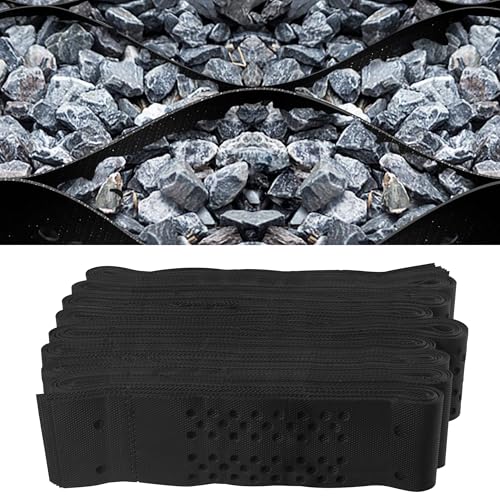
The Sunnyglade Ground Grid for Driveway Stabilization (6.5 x 16.5 FT) is an excellent choice for homeowners looking to enhance their driveways and outdoor spaces. This 4-inch thick grid supports up to 1880 lbs per square foot, making it perfect for gravel retention and stability in various applications like patios and RV parking. Its versatile design suits both slopes and flat areas, while the high-density polyethylene material guarantees durability and resistance to aging. Installation is simple: just spread the material, anchor it, and fill the cells for a sturdy surface. Enjoy a reliable and attractive driveway with this effective ground grid solution.
Best For: Homeowners seeking a durable and stable solution for driveway and outdoor space enhancement.
Pros:
- High Load Capacity: Supports up to 1880 lbs per square foot, making it suitable for heavy vehicles and equipment.
- Versatile Applications: Can be used on slopes and flat areas for various purposes such as patios, walkways, and RV parking.
- Durable Material: Made from high-density polyethylene, resistant to deformation, oxidation, and aging.
Cons:
- Installation Required: Requires some labor and time for proper installation and filling of the cells.
- Material Limitation: Primarily designed for gravel or soil filling, which may not suit all aesthetic preferences.
- Size Constraints: Each unit covers approximately 107 square feet, which may necessitate multiple units for larger areas.
2″ Thick Gravel Ground Grid for Driveway Stabilization

Engineered for homeowners and landscapers looking to enhance driveway stability, the 2″ Thick Gravel Ground Grid offers a robust solution for erosion control. Measuring 6.5ft by 33ft, this grid can withstand up to 1885 lbs per square foot when filled, making it perfect for driveways and other surfaces. Constructed from eco-friendly HDPE, it’s lightweight yet durable, resisting abrasion, acids, and alkalis. Installation is a breeze—simply spread the grid, anchor it, and fill the cells with your choice of material. It’s versatile enough for slopes or flat areas, ensuring stability wherever you need it.
Best For: Homeowners and landscapers seeking a reliable solution for driveway stabilization and erosion control.
Pros:
- Eco-friendly material: Made from HDPE, ensuring durability while being environmentally conscious.
- High load-bearing capacity: Can support up to 1885 lbs per square foot when filled, making it suitable for heavy vehicles.
- Easy installation: Simple to spread and fill, allowing for quick setup in various landscapes.
Cons:
- Limited aesthetic options: The grid may not blend seamlessly with all landscaping designs.
- Potential for soil erosion: If not filled properly, it may not prevent soil erosion effectively.
- Requires filling material: Additional costs for soil, grass, sand, or gravel needed to fill the grid.
Gravel Grid Geo Ground Grid for Driveway and Landscaping

Homeowners and landscapers seeking a reliable solution for driveway and landscaping stability will find the Gravel Grid Geo Ground Grid an ideal choice. This 3-inch thick grid covers 144 square feet and features 10×10 inch cells, perfect for supporting heavy vehicles and preventing erosion. Made from high-density polyethylene, it’s not only durable but also recyclable and resistant to deformation and aging. Installation is straightforward—just lay it down, secure it with stakes, and fill it with gravel or sand. With its versatility, it enhances stability and aesthetics for driveways, patios, and slopes, making it a smart investment for any project.
Best For: Homeowners and landscapers looking for a durable and versatile solution for driveway and landscaping stability.
Pros:
- Durable construction with high-density polyethylene ensures long-lasting performance.
- Easy installation process allows for quick setup and customization.
- Versatile applications make it suitable for various terrains and uses, enhancing both stability and aesthetics.
Cons:
- Requires filling with gravel or sand, which may involve additional costs and labor.
- May not be as effective in extremely wet or unstable soil conditions without proper drainage.
- Initial investment can be higher compared to traditional landscaping solutions.
3ft x 65ft Bi-Directional Geogrid Roll for Retaining Walls

If you’re looking for a reliable solution to enhance the stability of retaining walls, the 3ft x 65ft Bi-Directional Geogrid Roll is your ideal choice. Made from strong polypropylene, this geogrid resists deformation and chemicals, ensuring exceptional reinforcement. Its flexible design allows for easy adjustments, and the roll-up format makes transport and installation a breeze. With a mesh size of 1.5 inches, it’s perfect for preventing slope slipping and improving soil bearing capacity. Whether you’re working on garden paths or parking lots, this geogrid roll is essential for maintaining vertical and horizontal stability in erosion-prone areas.
Best For: Homeowners, landscapers, and construction professionals looking to enhance the stability and durability of retaining walls and slopes.
Pros:
- Exceptional reinforcement and stability provided by strong polypropylene material.
- Flexible design allows for easy adjustments and cutting to fit various project needs.
- Convenient roll-up format facilitates quick transport and installation, saving time and labor costs.
Cons:
- Limited to specific applications such as retaining walls, garden paths, and driveways, which may not suit all projects.
- May require additional materials or tools for installation, increasing overall project costs.
- Performance may vary based on soil conditions and environmental factors, requiring careful assessment before use.
Factors to Consider When Choosing a Slope Stabilization Grid
When choosing a slope stabilization grid, you need to take into account several key factors. Load-bearing capacity, material durability, and installation complexity can all impact your project’s success. Additionally, think about versatile application options and environmental considerations to guarantee you make the best choice for your needs.
Load-Bearing Capacity Importance
Understanding load-bearing capacity is vital for selecting the right slope stabilization grid. This capacity determines how much weight the grid can support without deformation or failure. Many grids can handle up to 1885 pounds per square foot when filled, making them suitable for heavy vehicles and challenging terrains. A higher load-bearing capacity enhances stability and durability, especially in areas prone to erosion. The grid’s material composition plays an important role; high-density polyethylene (HDPE) is a popular choice due to its strength and resilience against environmental factors. Properly evaluating your load-bearing requirements guarantees the grid can withstand expected traffic loads and environmental stresses, ultimately improving the longevity and effectiveness of your slope stabilization efforts.
Material Durability Factors
Selecting the right slope stabilization grid goes beyond just considering load-bearing capacity; material durability plays a significant role in guaranteeing long-term performance. High-density polyethylene (HDPE) is a top choice due to its resistance to deformation, oxidation, and aging. This guarantees your grid withstands various environmental conditions without losing effectiveness. Lightweight and abrasion-resistant, HDPE grids adapt well to different soil types and can handle exposure to acids and alkalis. Advanced manufacturing techniques like ultrasonic welding enhance their structural integrity, providing added resistance to tension and environmental stressors. With a load-bearing capacity of around 1880 to 1900 pounds per square foot, these grids offer strength for heavy applications, while their flexibility allows for easy customization to meet your specific project needs.
Installation Process Complexity
Choosing the right slope stabilization grid involves considering the complexity of the installation process, which can greatly impact your project’s timeline and effectiveness. The installation typically includes spreading the grid material, anchoring it, and filling the cells with soil, gravel, or sand. Some grids feature an interlocking design for quick, tool-free installation, while others may need additional tools. If you’re dealing with unique terrains, look for grids that can be cut and customized to simplify the setup. Connection buckles and ground stakes can enhance stability and ease of installation, ensuring the grid stays in place. Lightweight and foldable designs also make transport and handling easier, reducing overall installation complexity.
Versatile Application Options
When considering slope stabilization grids, it is crucial to recognize their versatile application options, as they can greatly enhance ground stability in a variety of settings. These grids are perfect for driveways, patios, garden paths, and RV parking, offering support across different terrains. Many designs work effectively on both slopes and flat areas, ensuring you get the reinforcement and erosion control you need. With a load-bearing capacity of up to 1885 lbs per square foot when filled, they can handle heavy vehicles without deforming the ground. You can also customize grids by cutting and connecting sections, tailoring them to your specific landscaping needs. Their drainage capabilities help prevent waterlogging and soil erosion, making them suitable for various environmental conditions.
Environmental Considerations
Understanding the environmental implications of slope stabilization grids is essential to making an informed decision. When choosing a grid, opt for recyclable materials like high-density polyethylene (HDPE), which offers durability and resistance to various environmental factors. This guarantees longevity while minimizing ecological impact. Effective drainage capabilities are also vital; they help prevent waterlogging and soil erosion, promoting healthier vegetation without the need for chemical fertilizers. Look for designs that allow water permeability, supporting natural stormwater management. Additionally, consider how your choice affects local wildlife habitats and soil composition to confirm it contributes positively to the surrounding ecosystem. By prioritizing these factors, you can enhance landscape stability while safeguarding the environment.